Saint Jermaine: From Alaskan Native Roots to Music, Media and a Life of Purpose
Written by daybreak on August 27, 2026
From summers king salmon fishing along the Yukon River to Division I football, mechanical engineering, entrepreneurship, music production, and Indigenous media, Saint Jermaine’s journey is a story about refusing to let a dream die inside you.
In a special Daybreak Star Radio interview, guest interviewer Alyssa London, a member of the Tlingit Tribe, sat down with Saint Jermaine. He is also known as Jermaine Prince Jackson, and they discussed his Alaska Native roots, unconventional career path, music, and the mindset that continues to push him forward.

Growing Up Between Anchorage and Western Alaska
Saint Jermaine is Yup’ik with family roots in Kotlik, Alaska, a village along the Yukon River in Western Alaska. Born in Fairbanks and raised primarily in Anchorage, he spent many summers in Kotlik surrounded by family and participating in a way of life deeply connected to the land and water.
Fishing was especially important. His grandfather, Fred Prince—the source of Jermaine’s middle name—was a fisherman, while his mother was one of the only women in the area who held a commercial fishing license. Jermaine remembers beginning to fish with her around age nine, sometimes working through the night during salmon season.
He also remembers seasonal traditions surrounding fishing, hunting, berry picking and gathering food. His mother became one of his strongest examples of resilience.
“My mom was like one of the strongest people I know,” he shared.
Growing up both Black and Yup’ik also shaped his identity. Although he sometimes experienced challenges because of his mixed heritage, Kotlik remained a place where family surrounded him and he felt at home.
From Alaska to Division I Football
Sports became another major influence on Jermaine’s life.
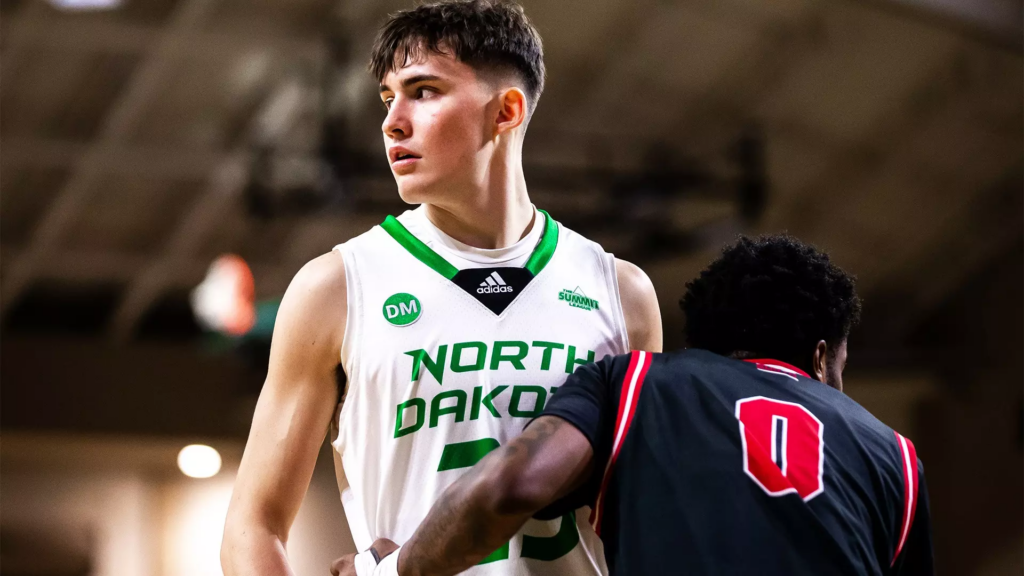
After beginning with basketball, he started playing football in eighth grade and quickly committed himself to improving. By his junior and senior years of high school, he was a captain on defense. He recalls waking up around 4:30 in the morning to train before school—even when another practice awaited him later that day.
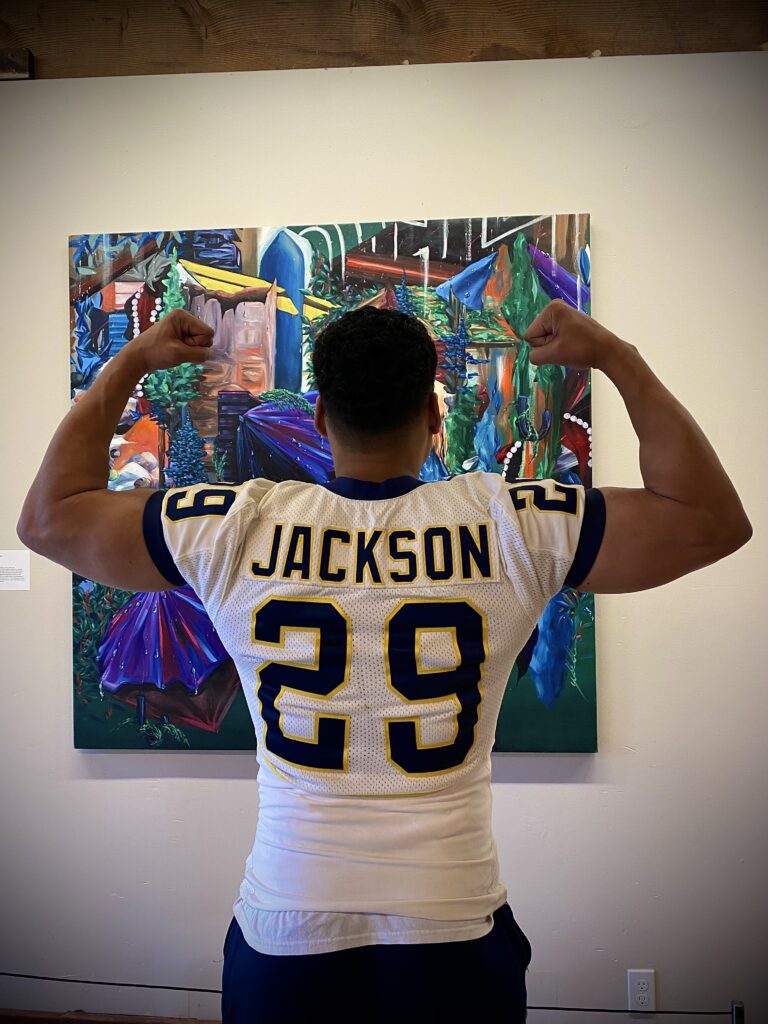
That discipline eventually helped take him from Alaska to the University of Michigan, where he walked onto the football team after being accepted into the College of Engineering.
Balancing Division I football and mechanical engineering was demanding, particularly while living thousands of miles from home. There were moments when the pressure became overwhelming, but Jermaine continued moving forward, leaning on friends, student organizations and thoughts of the younger family members looking up to him.
Although his college football career ended after two years, he accomplished the larger goal he had set for himself: earning his mechanical engineering degree.
Engineering Success—Then Choosing a Different Path
After college, Jermaine returned to Alaska and entered the oil and gas industry as a mechanical and piping engineer, contributing to projects involving major energy companies and the Trans-Alaska Pipeline System.
The experience taught him professionalism, communication and how to operate in demanding corporate environments. But it also taught him something deeper: professional success and personal fulfillment are not necessarily the same thing.
Seeing colleagues reach the later stages of their careers caused him to question whether he wanted to spend decades doing work that wasn’t connected to his deepest interests.
Then after moving to the Seattle area, he worked in construction and project management, helped his brother with a flooring company and built an event booth business serving events throughout the region.
After that, COVID-19 arrived.
With the event industry essentially shut down, Jermaine found himself facing another crossroads. One morning, he heard a message that stayed with him:
“Don’t die with the music still inside you.”
He decided it was time to seriously pursue the passion he had carried for years.

Becoming Saint Jermaine
Jermaine had played alto saxophone in high school. Then he began experimenting with beat-making in college, but music had repeatedly taken a back seat to school, football, and his professional career.
During the pandemic, that changed.
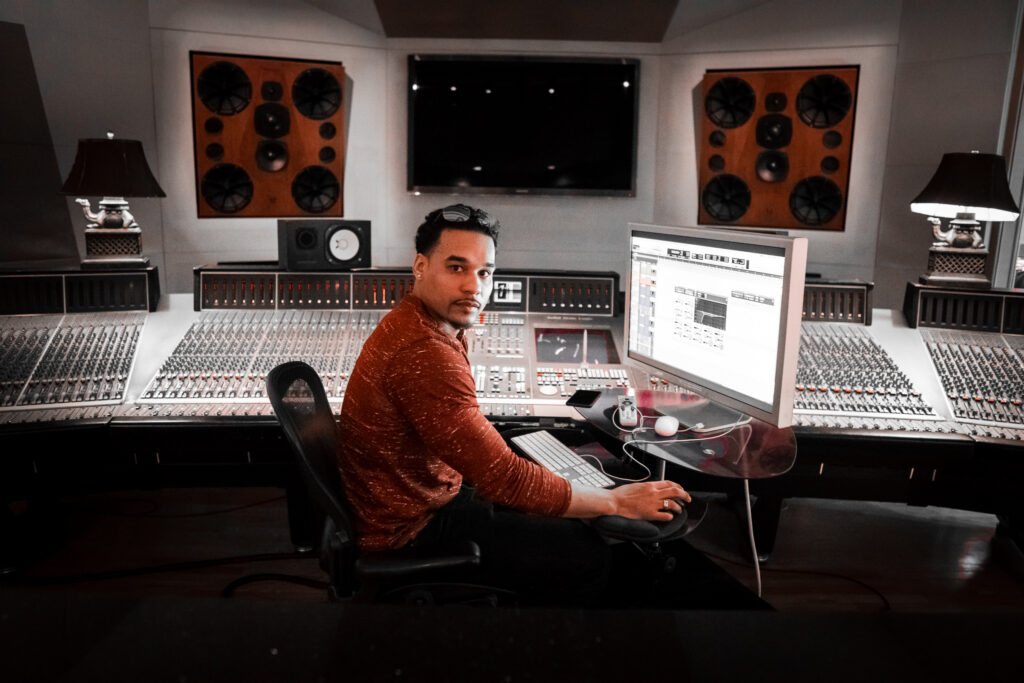
He bought a MacBook Pro and began teaching himself music production, moving from GarageBand into Logic Pro, then to FL Studio, and steadily developing his skills. Eventually, he returned to school again—this time studying audio production at the University of Washington.
“I’m still an engineer,” he joked. “Now I’m an audio engineer.”
As Saint Jermaine, he has since grown into a producer, recording artist and live performer. His catalog includes All Saints Special and All Saints Special 2, while he continues developing new music. His sound leans toward melodic, upbeat hip-hop and R&B, while sometimes addressing deeper issues affecting Native communities.
The creative process he has often begins with melodies appearing unexpectedly—in the morning, in the shower or whenever he enters what he describes as a flow state. He records those ideas and builds songs around them.
That work has also expanded into film and television. Saint Jermaine produced music for the series Deal Keeper, including its theme song, with the project eventually reaching the streaming platform Tubi.
Indigenizing the Airwaves
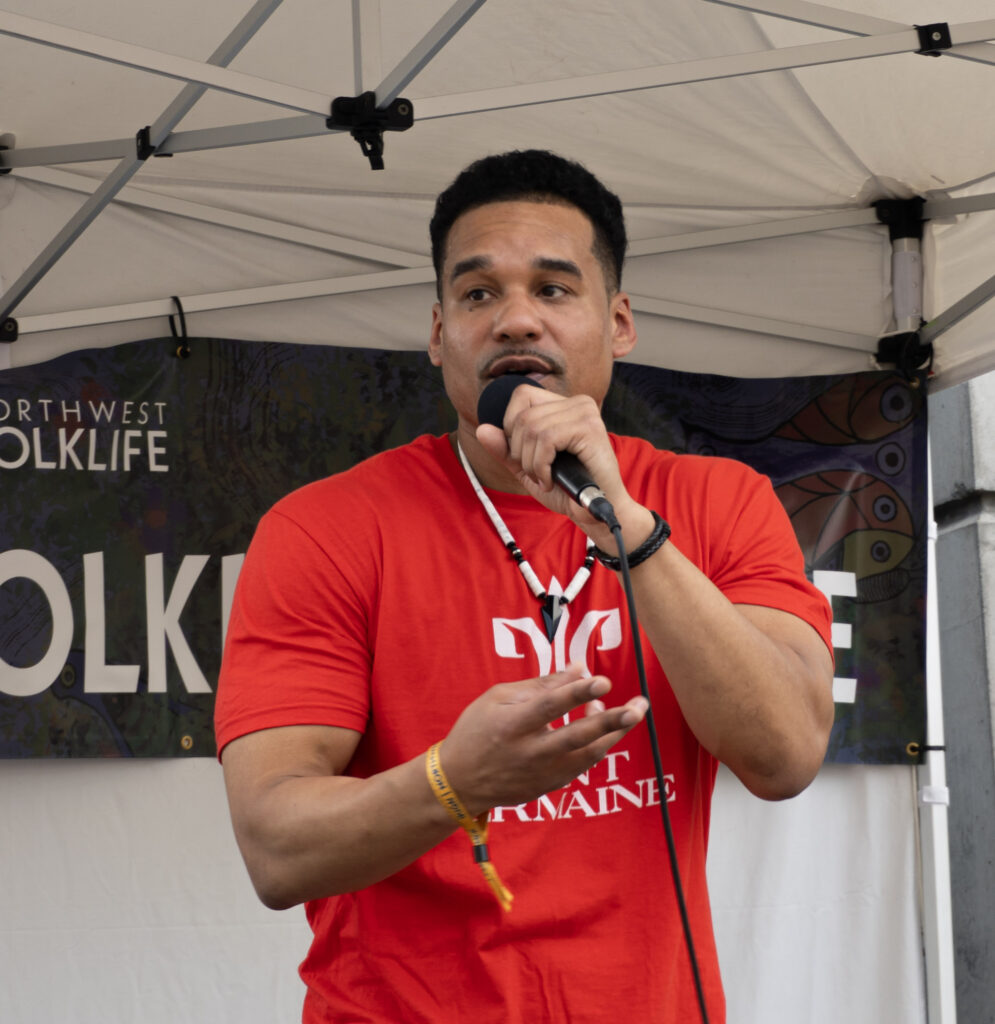
Today, Saint Jermaine is also helping amplify other Indigenous voices through his work at Daybreak Star Radio.
His sports program, The Winner’s Edge, spotlights Native and Indigenous athletes and gives them space to tell stories often overlooked by mainstream sports media. He is also developing programming focused on Alaska Native musicians and artists.
The mission connects directly to his own journey: use the opportunities he has received to create more opportunities for others.
Whether behind a microphone, producing a record, interviewing an athlete or stepping onto a stage, Jermaine continues returning to the same principle—keep going.
Saint’s path has not followed a straight line. It has moved from a Yup’ik village to Anchorage, Michigan, engineering offices, entrepreneurship, recording studios, radio and live stages. But each chapter has added another skill and another lesson.
And for Native youth who may wonder whether their own dreams are possible, Saint Jermaine leaves them with a simple message:
“If I can do it, you can do it.”
For him, mindset is everything. Believe in yourself before expecting anyone else to believe in you. Take action on your ideas. Stay open to where Creator may guide you. And above all, never give up on the music—or the dream—still living inside you.